
A water contamination outbreak in Indore has led to multiple deaths and illnesses. Health officials are conducting surveys and providing aid to affected residents.

Pfizer Inc and its group companies filed a petition in a US court against Aurobindo Pharma Ltd and Dr Reddy's Laboratories alleging that the Indian drug-makers were planning separately to come out with generic versions of its blockbuster multi-billion dollar drug Ibrance (palbociclib) before expiration of its patent.

November 7 2025, marked the 150th year of India's revered national song, Vande Mataram.

The US Food and Drug Administration's (USFDA)'s new draft guidelines aimed at speeding up and reducing the cost of developing biosimilars - lower-priced, near-replicas of complex biologic medicines - could significantly benefit Indian biotech companies.
US accounts for a large part of revenue for top Indian pharma companies like Gland Pharma (54 percent), Dr Reddy's (53 per cent), and Aurobindo Pharma (48 per cent).

Concerns over weakening demand for Indian pharmaceutical (pharma) drugs in the US - their largest export market - have weighed heavily on investor sentiment this year. While the Nifty 50 has gained 6.02 per cent year - to - date (as on September 15), the Nifty Pharma index has declined 5.18 per cent, National Stock Exchange data shows.
The tailwind of low price erosion in the US generics market, seen by domestic pharmaceutical companies in calendar year 2023 (CY23), may be reversing slowly, caution analysts. According to the latest data from US-based Centers for Medicare and Medicaid Services (CMMS), price erosion in calendar year 2024 (CY24) on a year-to-date (YTD) basis stood at a high of 15 per cent in the oral solid dosage (OSD) segment compared to a low of 1 per cent in CY23. This erosion, according to a report by Antique Stock Broking, was the highest in the last three years.

One can only sincerely wish the Dalai Lama a very long life at the service of world peace. His presence is much required today on the planet, notes Claude Arpi, who has known His Holiness for more than half a century.

Indian drugmakers supply 47 per cent of the generic medicine requirements in the US, and tariffs would have increased prices in the US domestic market for patients, who are already dealing with drug shortages.

Industry insiders in India warn that any such move in the pharmaceutical sector could be counterproductive for the US as it may face increased drug shortages if tariffs are imposed on such imports.
The BSE Healthcare Index is up 19 per cent as compared to BSE Sensex returns of 11 per cent during this period. Nitin Agarwal of DAM Capital highlighted this trend in a report last month. "After a sustained period of underperformance over FY21-23, the BSE Healthcare Index has once again captured the spotlight. "The recent uptick in performance has been driven by hospitals and emerging green shoots in pharmaceutical exports, particularly to the US, along with sustaining momentum in domestic branded formulations," he said.
Analysts are expecting pharmaceutical companies to post sales growth of 10-11 per cent in the second quarter this financial year while the Ebitda (earnings before interest, tax, depreciation, and amortisation) margins are anticipated to improve by about 110 basis points. Ebitda improvement will be led by lower input costs because prices of active pharmaceutical ingredients (APIs) are 5-15 per cent lower year-on-year (Y-o-Y). Axis Capital said sales growth would be around 10 per cent, of which growth in the India market would be 11 per cent or so.


"White fungus (Candida) causing multifocal perforations in the food pipe, small bowel and large bowel in COVID-19 infection has not been reported in literature to the best of our knowledge," Dr Anil Arora, Chairman of the Institute of Liver, Gastroenterology and Pancreaticobiliary Sciences at the hospital, said.

A reading of the reports suggests that there is no standard practice for reporting political contributions and it is left to the company's discretion to report them as they find fit.

The administration has declared that devotees will not be permitted to bring external colours into the temple premises in Ujjain city of Madhya Pradesh.

After spending considerable time and energy in remediation efforts in the wake of the US Food and Drug Administration's warning letter on compliance issues, the company's leadership has finally set out to bring the house in order.

Drug shortages in the US are at an all-time high, and price erosion has stabilised, which could benefit Indian pharmaceutical (pharma) companies with a US focus, according to analysts. Nuvama Research analysts said that US price erosion seems to have normalised to its old levels of 6-8 per cent and volumes are picking up with easing of inventory. Similarly, an ICICIdirect analyst noted: "Price erosion intensity has now moderated to a single digit and is expected to tone down a
An acute drug shortage in the US and stable pricing along with product launches are likely to boost revenues of India's pharmaceutical companies during the first quarter of this financial year, analysts said. Most brokerages estimate a top line growth of around 14-15 per cent, with earnings before interest, taxes, depreciation, and amortisation (Ebitda) growth of 24-30 per cent for Q1 of FY24. Hospitals are, however, likely to report lower occupancy rates, and diagnostics companies may witness an impact from delayed monsoon.

Fourteen priests, including 'sevaks' (assistants), were injured in a fire that broke out in the Mahakal Temple in Ujjain in Madhya Pradesh on Monday during 'bhasma aarti', an official said.
Hospitals to recover from sluggish Q3; diagnostics' growth rate at pre-Covid levels.

BRS leader and former Telangana minister Vemula Prashanth Reddy claimed that Kavitha was taken to Delhi on a flight at 8.45 pm.
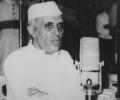
The Congress on Sunday took a strong exception to the exclusion of former prime minister Jawaharlal Nehru in the Karnataka government's newspaper advertisement on freedom fighters and termed the Bharatiya Janata Party action 'pathetic'.
The government should take measures to promote innovation and R&D while simplifying regulations for the sector in the upcoming Union Budget, as per pharmaceutical industry bodies. Outlining the wish list for the sector in the upcoming Union Budget, Indian Pharmaceutical Alliance (IPA) secretary general Sudarshan Jain said the domestic pharma industry is currently around $50 billion in size and aspires to grow to around $130 billion by 2030 and $450 billion by 2047. "To achieve this vision, the Union Budget 2023-2024 should help fuel innovation and R&D, which will set the pace for propelling the pharmaceutical industry forward," he told PTI.
After making big-ticket acquisitions abroad, leading Indian pharmaceutical companies like Dr Reddy's Laboratories, Ranbaxy Laboratories, and Aurobindo Pharma are rapidly shifting production to their Indian facilities.
USFDA has extended the timeline for granting tentative approval to generic drug applications filed under Para IV of its rules by 10 months.
Reinvent and innovate will be the key mantra for the Indian pharma industry in the New Year as the 'pharmacy of the world' looks to move from volume to value leadership, amid emerging challenges of inflation and pricing pressures in the global markets. While R&D investment, market competitiveness, regulatory scrutiny, and domestic price regulations are expected to shape the growth of generics and injectable products, concerns such as price control and customs duties on medical equipment will continue to bother the healthcare industry in 2023. The industry believes that in view of India's G20 Presidency, digital health innovation, achieving universal health coverage, improving healthcare infrastructure and delivery will continue to be the key driving factors in 2023.

The upside for Ranbaxy Laboratories is likely to continue even as it loses its 180 days of marketing exclusivity for the Lipitor generic in the American market.

European countries are trying to woo back the Indian customers they had lost following seizure of drug consignments by Customs authorities of several European Union members.

The anti-depressant drug market in the US is primarily ruled by Effexor XR (Venlafaxine) of Wyeth (now owned by Pfizer).
The rupee's appreciation of 6.4 per cent against the dollar and 12 per cent against the euro is likely to hurt the first-quarter performance of the pharmaceutical sector, indicate a results' preview by broking houses.
Better-than-expected financial results in Q3 due to higher revenue growth and margins in key markets fuel the rally

India emerging as a big global destination for contract manufacturing, unlike R&D outsourcing.

This increase is despite the decreased growth of drug sales in the US - the world's largest market - which has seen a tightening of regulations and aggressive competition.

List of govt hospitals authorised to treat swine flu
Dr Reddy's Laboratories, Jubilant Organosys, Orchid Chemicals, Aurobindo Pharma and Shasun Chemicals and Drugs are among those who have borrowed either to expand locally or to acquire companies abroad, but are now struggling to repay the dues, analysts say. Some of the companies' debt now exceeds their market capitalisation, as local and global investors sold stocks on concerns over slowdown and falling revenues. A few drug makers may be forced to sell assets to repay debt.
In comparison, Indian companies received only 23 out of 139 final approvals (16.54 per cent) in the corresponding period in 2006.
As many as 15 companies across the world have lined up generic variants of Pfizer's Zoloft (Sertaline HCL), for which the exclusive six-month marketing period granted to the successful patent challenger, Teva of Israel, ends on Tuesday.
